5 Software Companies Setting the Standard for SaaS Excellence in April 2026
The software-as-a-service market undergoes massive shifts every single month, but April 2026 has proven to be a pivotal moment for enterprise efficiency.
Organizations no longer look for simple tools; they demand ecosystems that integrate deep intelligence with user-centric design. While many firms claim to lead the digital transformation, only a handful actually deliver the reliability and innovation required at scale.
This list explores five industry giants that have separated themselves from the pack through consistent performance and technical breakthroughs.
5 Best companies setting the SaaS standard
1. Adobe
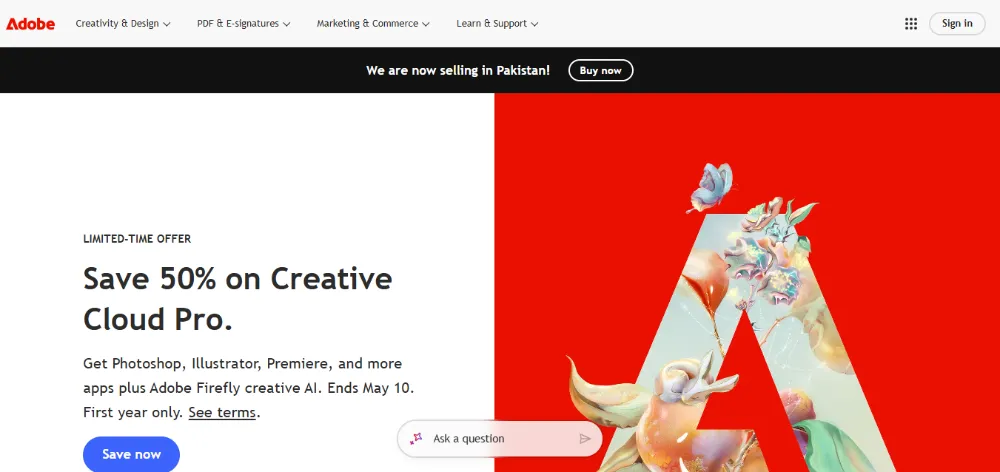
Adobe continues to dominate the creative and enterprise landscape, securing its position as the top performer this April. Their recent sweep of over 28 G2 Best Software Awards highlights a level of product maturity that few competitors can match.
From the ubiquitous Acrobat to their sophisticated Experience Manager, the company provides a cohesive bridge between creative vision and data-driven execution. Their recent focus on “agentic” experience orchestration allows marketing teams to automate complex journeys without losing the human touch in their branding.
Best for
This platform is the premier choice for large-scale enterprises and creative professionals who need a unified environment for content creation, document management, and real-time customer data analysis.
Key features
- Adobe Experience Manager: A top-tier content management system that streamlines global site orchestration.
- Real-Time CDP: Tools designed to unify customer profiles while strictly adhering to modern privacy and governance standards.
- Adobe Workfront: An enterprise-grade work management solution that connects high-level strategy directly to daily delivery tasks.
Achievements
The company recently earned 28 recognitions in the 2026 G2 Best Software Awards, and the judges named Adobe Acrobat the Best Software Product. They have also successfully integrated advanced AI-powered journey optimizers that help brands scale personalized customer experiences.
2. Workday
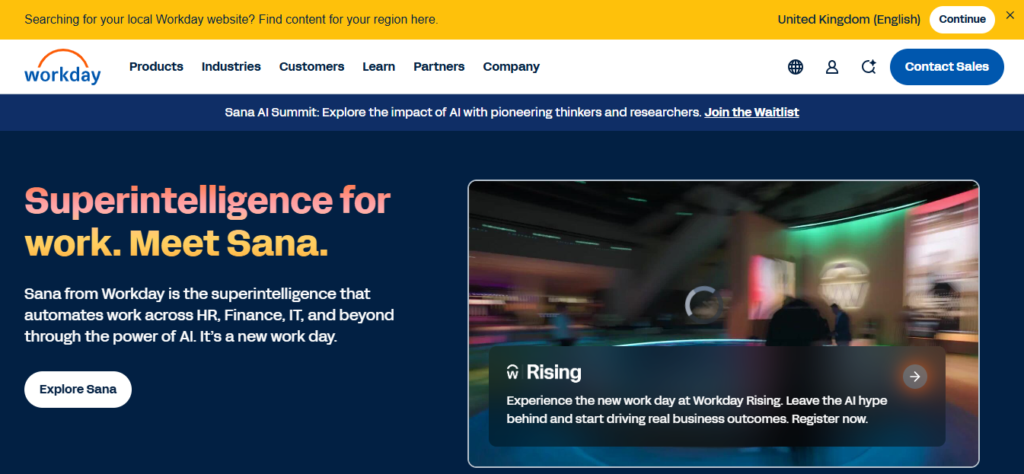
Workday remains a cornerstone for human capital management and financial planning. Their system is highly regarded because it continuously processes payroll and updates in real-time across 60 different countries.
In early 2026, they expanded their reach by introducing more accessible pricing models for mid-market businesses, proving that enterprise-grade power doesn’t always have to be restricted to the Fortune 500.
Best for
Modern HR departments and finance teams require a single, secure database to manage global workforces and complex payroll cycles.
Key features
- Illuminate AI: A built-in intelligence engine that assists with labor demand forecasting and automated scheduling.
- VNDLY Integration: A specialized module for managing contingent workers and freelance talent within the same ecosystem.
- Skills Cloud: An assessment tool that maps employee capabilities to identify internal growth opportunities.
Achievements
Workday has maintained its status as a market leader by achieving 700+ third-party integrations and launching streamlined deployment options that reduce setup time from months to weeks for smaller firms.
3. GitLab
GitLab has redefined the DevSecOps category by building security directly into the code development pipeline. Their April 2026 updates introduced autonomous remediation agents that can propose fixes for vulnerabilities before a human even reviews the code. By centralizing the entire software lifecycle into one application, they eliminate the friction often found between development and security teams.
Best for
Software engineering teams and platform architects who prioritize security-first development and need a transparent, all-in-one CI/CD pipeline.
Key features
- Agentic SAST: A reasoning-based security tool that generates and validates high-quality code fixes.
- GitLab Duo: An AI-assisted suite that helps developers write, test, and document code more efficiently.
- ClickHouse Integration: A high-performance analytics backend that provides real-time insights into development velocity.
Achievements
The release of GitLab 18.11 marked a milestone in autonomous software development, featuring the first reliable “CI Expert” agent capable of building test pipelines from plain-language prompts.
4. Atlassian
Atlassian is the primary engine behind team collaboration, especially with the 2026 rollout of their “Rovo” AI agents.
They have moved beyond simple task tracking to offer strategic alignment tools that connect executive goals to individual Jira tickets. Their new seasonal release cycle ensures that major updates are predictable, allowing IT departments to plan their upgrades with much greater precision.
Best for
Cross-functional teams that need to connect technical project management with high-level business strategy.
Key features
- Atlassian Rovo: A specialized agent that uses organizational knowledge to resolve service requests and help desk tickets.
- Jira Product Discovery: A dedicated space for product managers to prioritize ideas and gather data before moving to development.
- Universal HRIS Connector: A new bridge that allows companies to sync their organizational structure from any HR system into Atlassian.
Achievements
The company successfully transitioned to a more stable enterprise operating model in 2026, gaining SOC2 and ISO27k compliance across its entire focus and talent strategy collections.
5. Intuit
Intuit has successfully pivoted from being just an accounting tool to a full-scale Enterprise Suite. Their 2026 enhancements focus heavily on decision-grade visibility, allowing finance leaders to see consolidated data across multiple entities without the need for manual spreadsheets.
The platform now handles complex parallel approval chains, making it suitable for larger organizations with rigorous audit requirements.
Best for
Growing businesses and multi-entity corporations need robust financial controls and automated intercompany reconciliations.
Key features
- Intuit Enterprise Suite (IES): A cloud-native solution designed for businesses managing complex organizational structures.
- Sales Tax Agent: An automated tool that scans for mismatches in tax reports to ensure audit readiness.
- Advanced Inventory: A module that supports multi-location tracking and real-time stock visibility across different warehouses.
Achievements
Intuit recently launched a unified employee list for QuickBooks Payroll Elite, which significantly reduced administrative overhead for companies managing hundreds of W-2 workers across different regions.
FAQs
Which of these companies is best for small businesses?
While Adobe and Workday focus on large enterprises, Intuit offers the most scalable entry points for smaller teams. Their QuickBooks ecosystem allows a business to start with basic accounting and eventually move into the full Enterprise Suite as they grow.
Are these platforms secure for sensitive data?
Every company on this list maintains high-level certifications like SOC2 and GDPR compliance. GitLab and Adobe, in particular, have invested heavily in automated security governance to protect user data from the moment it enters the system.
Can these tools work together?
Most of these SaaS giants offer extensive marketplaces with hundreds of pre-built integrations. For example, you can often connect Jira and Workday to sync project costs with payroll and resource planning data.
